
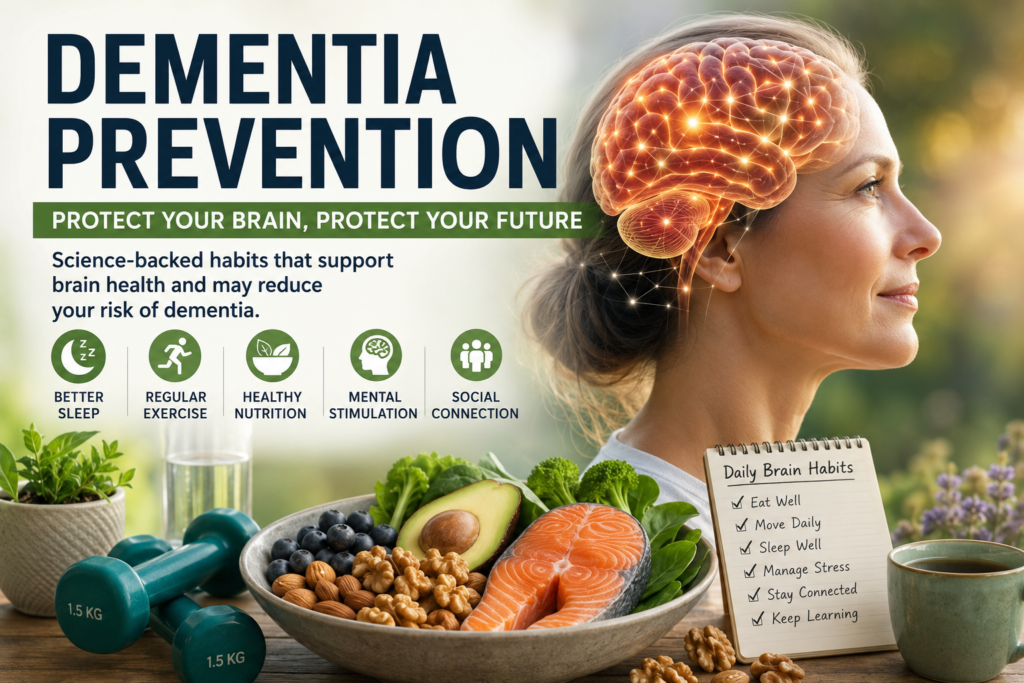
Discover the latest science-backed strategies to reduce your risk of dementia naturally. Learn how fasting, quality sleep, exercise, nutrition, and healthy lifestyle habits protect your brain and support lifelong cognitive health.
How to Reduce Your Risk of Dementia Naturally
Dementia is one of the greatest health challenges of our time. Millions of people worldwide are affected, and the numbers continue to rise as populations age.
For many families, dementia is more than memory loss. It changes relationships, independence, and quality of life. Watching a loved one slowly forget names, places, and cherished memories can be heartbreaking.
But here’s something many people don’t realize:
The changes that eventually lead to dementia often begin 20 to 30 years before symptoms appear.
That means the choices we make today—how we sleep, eat, exercise, and care for our overall health—may influence our brain health for decades to come.
While there is currently no guaranteed way to prevent dementia, a growing body of scientific evidence suggests that many healthy lifestyle habits are associated with a lower risk and better cognitive health throughout life.
Let’s explore what the science says.
What Is Dementia?
Dementia is not a normal part of aging.
Instead, it is a group of symptoms caused by diseases that damage brain cells.
These symptoms may include:
- Memory loss
- Difficulty solving problems
- Trouble communicating
- Confusion
- Personality changes
- Difficulty performing everyday tasks
Alzheimer’s disease accounts for approximately 60–70% of dementia cases, making it the most common form.
Other types include:
- Vascular dementia
- Lewy body dementia
- Frontotemporal dementia
Although these conditions differ, they all interfere with the brain’s ability to function normally.
What Happens Inside the Brain?
A healthy brain contains billions of neurons that communicate through electrical and chemical signals.
In dementia, several harmful processes begin damaging these cells.
These include:
Amyloid Plaques
Sticky protein fragments called beta-amyloid accumulate between brain cells.
Tau Tangles
Another protein called tau twists inside neurons, disrupting their internal transport system.
Chronic Inflammation
The brain’s immune system becomes overactive, leading to long-term inflammation that can damage healthy tissue.
Oxidative Stress
Free radicals damage cell membranes, proteins, and DNA over time.
Poor Blood Flow
Reduced circulation means brain cells receive less oxygen and fewer nutrients.
Insulin Resistance
Some researchers even refer to Alzheimer’s disease as “Type 3 Diabetes” because impaired insulin signaling may contribute to cognitive decline.
Early Warning Signs
Recognizing symptoms early allows individuals and families to seek medical evaluation sooner.
Common warning signs include:
- Frequently forgetting recent conversations
- Asking the same question repeatedly
- Losing items regularly
- Getting lost in familiar places
- Difficulty finding words
- Poor judgment
- Personality changes
- Increased anxiety or depression
Occasional forgetfulness is common with aging, but persistent changes deserve medical attention.
The Brain’s Night Shift: Understanding the Glymphatic System
One of the most fascinating discoveries in neuroscience is the glymphatic system.
Think of it as your brain’s overnight cleaning crew.
During deep sleep, cerebrospinal fluid flows through brain tissue, helping remove metabolic waste products—including beta-amyloid and tau proteins that are linked with Alzheimer’s disease.
This cleaning process is far more active during deep sleep than while you’re awake.
Poor sleep may reduce this natural clearance, allowing waste products to accumulate over time.
That’s one reason why sleep is increasingly recognized as an essential pillar of brain health.
Seven Science-Backed Habits That Support Brain Health
1. Prioritize Quality Sleep
Aim for 7–9 hours of sleep each night.
Good sleep supports:
- Memory consolidation
- Learning
- Emotional regulation
- Glymphatic clearance
- Brain recovery
Tips:
- Maintain a regular sleep schedule.
- Keep your bedroom cool and dark.
- Avoid screens before bed.
- Limit caffeine late in the day.
2. Exercise Regularly
Physical activity is one of the most powerful tools for maintaining brain health.
Research shows exercise can:
- Improve blood flow to the brain
- Increase Brain-Derived Neurotrophic Factor (BDNF), which supports neuron growth
- Reduce inflammation
- Improve insulin sensitivity
Aim for:
- At least 150 minutes of moderate exercise per week
- Strength training twice weekly
- Balance and flexibility exercises
3. Eat a Brain-Friendly Diet
The Mediterranean diet consistently ranks among the healthiest eating patterns for cognitive health.
Focus on:
- Leafy greens
- Extra virgin olive oil
- Fatty fish
- Nuts
- Seeds
- Beans
- Whole grains
- Colorful vegetables
- Berries
Limit:
- Ultra-processed foods
- Sugary beverages
- Excess refined carbohydrates
- Trans fats
4. Control Blood Sugar
High blood sugar may damage blood vessels and nerves throughout the body—including the brain.
Healthy habits such as:
- Eating fiber-rich foods
- Exercising regularly
- Maintaining a healthy weight
- Limiting added sugars
support both metabolic and brain health.
5. Protect Your Heart
What’s good for your heart is usually good for your brain.
Manage:
- Blood pressure
- Cholesterol
- Diabetes
- Smoking
- Physical inactivity
Healthy blood vessels help nourish brain cells with oxygen and nutrients.
6. Keep Your Brain Active
The brain thrives on challenge.
Try:
- Reading
- Learning a language
- Playing a musical instrument
- Crossword puzzles
- Chess
- Learning new skills
Lifelong learning helps build what’s known as cognitive reserve, which may help the brain cope better with age-related changes.
7. Stay Socially Connected
Humans are social creatures.
Maintaining meaningful relationships is associated with:
- Better mood
- Reduced stress
- Improved cognitive performance
- Greater overall well-being
Even regular conversations with friends or family can make a difference.
What About Intermittent Fasting?
Intermittent fasting has gained significant attention for its potential health benefits.
Animal studies suggest fasting may:
- Increase ketone production
- Enhance autophagy (the body’s cellular recycling process)
- Reduce inflammation
- Improve insulin sensitivity
- Increase BDNF levels
These mechanisms are biologically promising for brain health.
However, it’s important to understand that human studies are still evolving, and there is currently no conclusive evidence that intermittent fasting prevents dementia.
If you practice intermittent fasting, think of it as one possible part of an overall healthy lifestyle—not a standalone solution.
(Want to learn more? Read our guide: Intermittent Fasting Timeline: What Happens to Your Body After 12, 18, 24, 48, and 72 Hours?)
Foods That Love Your Brain
Add these regularly to your plate:
🥑 Avocados
🐟 Salmon and sardines
🫒 Extra virgin olive oil
🥜 Walnuts
🫐 Blueberries
🥬 Spinach and kale
🥚 Eggs
🌰 Pumpkin seeds
🫘 Beans and lentils
Each provides nutrients associated with healthy brain function, including omega-3 fats, antioxidants, vitamins, and minerals.
What About Supplements?
No supplement can prevent dementia, but some may support brain health in certain situations.
Research has investigated:
- Omega-3 fatty acids
- Vitamin D (especially when deficient)
- B vitamins for elevated homocysteine
- Magnesium
- Curcumin
- Lion’s Mane mushroom
Talk to your healthcare provider before starting supplements, especially if you take medications or have medical conditions.
Can Dementia Be Prevented?
At present, there is no guaranteed way to prevent dementia.
However, scientific evidence strongly suggests that maintaining a healthy lifestyle throughout life can reduce many known risk factors and support long-term brain health.
Small daily choices add up.
Prioritizing sleep, staying active, eating nutritious foods, protecting cardiovascular health, keeping your mind engaged, and maintaining social connections are all investments in your future self.
Your brain is with you for life.
Take care of it today so it can take care of you tomorrow.
Frequently Asked Questions
Is dementia a normal part of aging?
No. While some mild changes in memory can occur with age, dementia is caused by diseases that damage brain cells and interfere with daily life.
Can Alzheimer’s disease be prevented?
There is currently no guaranteed way to prevent Alzheimer’s disease. However, healthy lifestyle habits may reduce risk and support long-term brain health.
Does sleep really affect dementia risk?
Yes. Deep sleep helps activate the brain’s glymphatic system, which clears waste products that accumulate during the day. Poor sleep has been linked with a higher risk of cognitive decline.
Is intermittent fasting good for brain health?
Early research is promising, particularly in animal studies. Fasting may improve metabolic health and activate beneficial cellular processes, but more human research is needed before it can be recommended specifically for dementia prevention.
Which diet is best for brain health?
The Mediterranean diet is among the most well-studied eating patterns for supporting cognitive health and healthy aging.
Final Thought
Healthy aging isn’t about finding a miracle cure—it’s about building habits that support your body and mind every day. By caring for your brain through nourishing food, regular movement, restorative sleep, meaningful relationships, and lifelong learning, you’re investing in a healthier future.